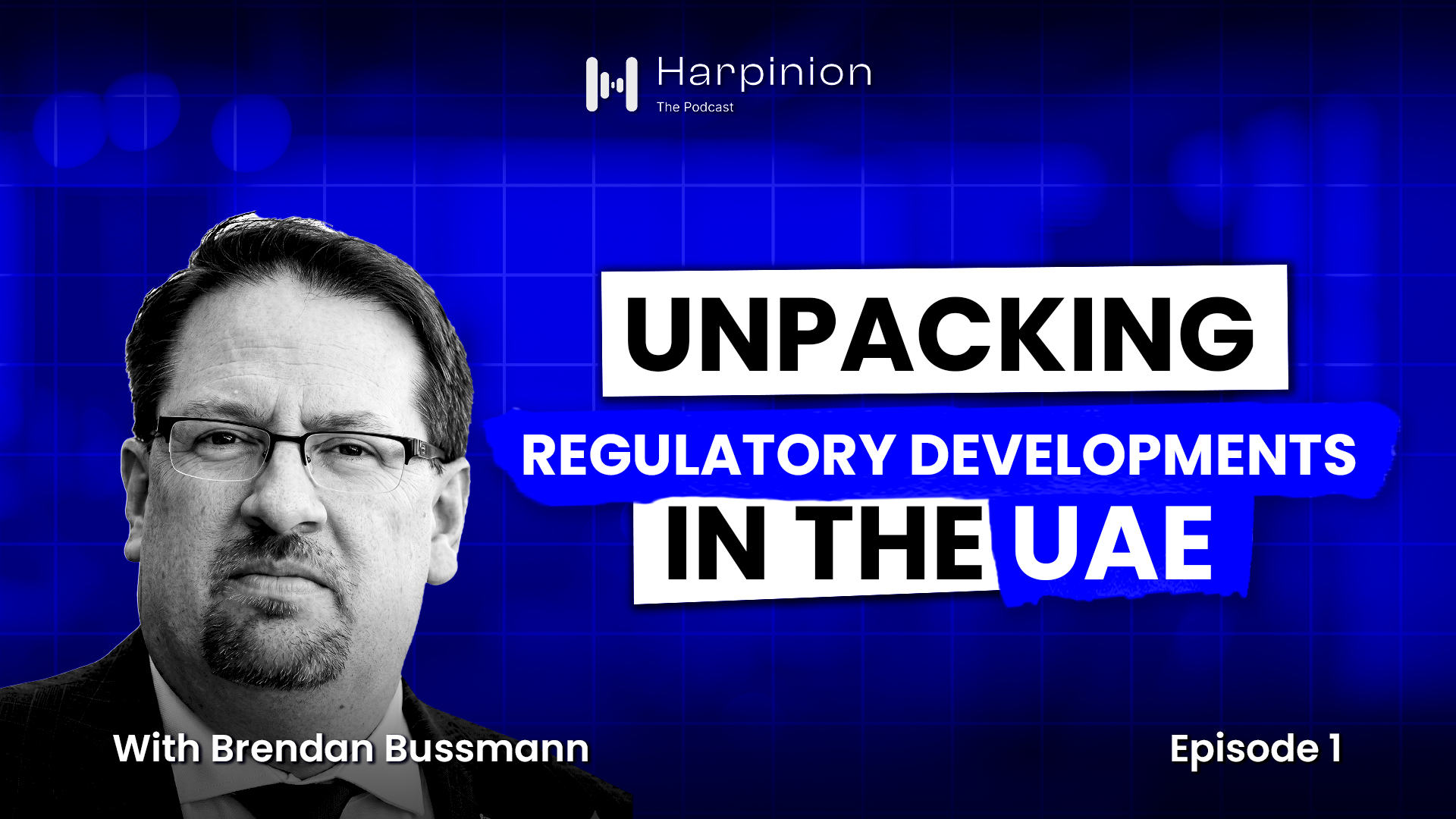
In Episode 1 of Harpinion, host Harmen Brenninkmeijer sits down with Brendan Bussmann, one of gaming's most seasoned political strategists and founder of B Global Associates, for a wide-ranging conversation that goes far beyond the usual industry talking points.
Recorded while Bussmann is on the ground in the UAE, this episode opens with a candid look at how two people shaped by very different political traditions, a Dutch politician who once shared a party with the future NATO Secretary General, and an American who was running congressional campaigns while most of us were still in high school — ended up spending their careers at the intersection of gaming and politics. Their conclusion? Politics is unavoidable in this industry. The only question is whether you understand it well enough to navigate it.
From there, the conversation takes a deep dive into the most consequential gaming development of the decade: the emergence of the UAE as a regulated gaming market. Bussmann breaks down why Ras Al Khaimah's Wynn resort — set to open in 2027 and on track to be the largest integrated resort built since Marina Bay Sands — is more than just a casino. It's a signal. He explains the political architecture behind the GCGRA, why the UAE's pragmatic, expat-driven model of governance is uniquely suited to pulling this off, and what the realistic trajectory looks like: not a single venue, but potentially two to four properties across the Emirates over time.
But the conversation doesn't stay in the Gulf. Bussmann and Brenninkmeijer take on the broader global picture — Thailand's stalled legalisation debate, the ongoing tension between regulated and grey markets, and the fundamental question that governments around the world keep getting wrong: why do jurisdictions consistently overtax and under-deliver on gaming regulation, leaving billions in revenue on the table while illegal markets thrive?
There's also a frank discussion about the United States — its political polarisation, the erosion of the bipartisan pragmatism that once made American governance a global model, and what that means for gaming policy in a country where, as Bussmann pointedly notes, no politician has ever actually lost an election because of gaming.
This is a conversation about power, policy, and why the countries getting gaming right are the ones willing to think strategically rather than reactively. Essential listening for anyone serious about where this industry is heading.